We've been out of the country over Easter, and one of the countries our family visited was Sri Lanka.
We've been to Asia a few times in the past, but only to places like Hong Kong and Singapore, during stopovers on long-haul flights. Sri Lanka was a new experience for us.
Driving through Colombo, we saw how genuinely poor people live; crowded into makeshift wooden shelters that most people in the UK would be ashamed to have as a garden shed.
When we travelled south to our villa, just out of Galle, people seemed slightly better off. The walls of their houses were made of concrete blocks, and the roofs looked at least waterproof. There still seemed to be too many people to possibly live in one small room, but the houses looked solid, permanent.
In the area we stayed in, there were a lot of ruined buildings especially on the coast road. Of course these were remnants of the 2004 Tsunami, in which at least 30 000 people died.
Sri Lanka has many stray dogs. We did see some dogs wearing collars, but if they were pets they seemed to spend a lot of time wandering along the roads with all the rest.
Most of the dogs we saw were obviously unowned, with signs of skin disease and lameness but there were very few that looked like walking skeletons. Most seem to get enough to eat by hanging around restaurants, hotels, villages and temples.
Dogs in Sri Lanka appear to have a lot more road sense than dogs in the UK. I saw many of them check the road for vehicles before stepping out into the traffic but I guess they learn this the hard way.
And you'll see by my photos, that a lot of these dogs look similar. The ones we saw were all the size of small Labradors and most had a short coat in some shade of brown.We did see a couple of German Shepherds at a guest house, but I'm pretty sure they must have been imported from somewhere. And we did see one smaller dog, living on an island that had a black and white shaggy coat; so was maybe a collie cross of some kind? No one spoke enough English to satisfy my curiosity, so I'll just have keep wondering.
I asked our driver what people did if they found an ill or injured dog and it seems ill dogs are avoided due to the risk of rabies. He did mention the possibility of taking an injured one to a vet, but most vets specialise in farm animals, so are mainly concerned with production. in most areas, there simply isn't usually the money available for specialised equipment or drugs for companion animals.
Many people in the UK consider their pets a right, not a luxury, but a visit to a less wealthy country should be able to convince most reasonable people otherwise. We didn't witness any animal cruelty on our travels, but it's obvious that people in Sri Lanka struggle to provide their families with the basic necessities of life, so the needs of animals such as dogs must be way down that list.
Wednesday, 27 April 2011
Saturday, 2 April 2011
I Hope They Name Him 'Lucky'.
http://www.bbc.co.uk/news/world-asia-pacific-12944317
Coastguards patrolling the coastline of Japan for survivors that may have been washed out to sea by the tsunami that hit the country's north-east coast three weeks ago, have rescued a dog found living on the roof of a floating house.
If you watch the video found in the link above, you can see that the dog is obviously hungry but appears otherwise healthy.
This must be the luckiest dog on the planet, surely?
Coastguards patrolling the coastline of Japan for survivors that may have been washed out to sea by the tsunami that hit the country's north-east coast three weeks ago, have rescued a dog found living on the roof of a floating house.
If you watch the video found in the link above, you can see that the dog is obviously hungry but appears otherwise healthy.
This must be the luckiest dog on the planet, surely?
Wednesday, 30 March 2011
Read My Guest Posts
The Visiting Vet has done a few guest posts lately, one at Mum’s The Word and now one at Little Mummy. If you haven’t already, go and have a read of them and please, leave a comment to let me know what you think.
Tuesday, 29 March 2011
There Is No Immunity For Vets.
Being a vet can is an emotionally draining job.
Our patients are rarely 'just animals' to us and we often get more involved than is probably wise. We celebrate when things go well and someones pet is made well again, and grieve alongside the owner when results are not what we wished for and then again when all hope is lost.
We all have lost sleep over cases that have had less than ideal outcomes, and have wondered if we could have done things differently. We have moments of self doubt and sometimes advising clients on what they 'should do' makes us feel completely inadequate.
Of course, unless the patient is in agony, with no hope of recovery, we can't tell you what to do with your pet. There are almost always choices to be made, and unfortunately we often need to run more tests, which cost more money- money, clients sometimes don't have readily available.
And even if the tests are affordable, should they be done? Are they invasive? What will they tell us? Will we be able to fix the problem? These are questions clients ask us and we ask ourselves every day.
Today The Old Boy went down the road to a local surgery to have a broken tooth out and a couple of lumps removed. The lumps were cysts and the sore tooth won't trouble him again but his blood results show some abnormalities. His liver isn't not be doing its job properly and his kidneys aren't what they used to be. I was trying to listen to his blood chemistry results during the school pick up this afternoon, and then didn't have a chance to ring back later. I'll find out more tomorrow. But it's clear all is not well with him.
The weight loss I've noticed probably isn't down to an improved exercise regime after all, and that panting I've noticed may have another cause rather than sitting next to the radiator. The Old Boy is 10, and had a spinal stroke in 2009. He sleeps a lot these days and can't get in the car without assistance, but is happy to eat his food and come for walks with The Lurcher. I want him to have a good quality of life, I don't want him to waste away in a corner.
There are tough decisions ahead for our household and I too will be seeking advice from vets. I will ask my colleagues ' What would you do?'They will offer me words but I know they can't really help me.
It's going to be me that has to make the ultimate decision. It's such a hard thing to do.
Even for a vet.
Friday, 25 March 2011
TVIL: Should I spay my bitch?
I received this question via email from someone who follows me on twitter but for some technical reason I haven't been able to email them a reply. Sometimes my computer doesn't like AOL addresses, sorry.
So I'm popping it up on here in the hope that the person who emailed me reads it. Let me know if you do! Hopefully my answer to you might help other people to decide whether to spay their bitches, or not, as well.
Dear Jacq
Dear S,
So I'm popping it up on here in the hope that the person who emailed me reads it. Let me know if you do! Hopefully my answer to you might help other people to decide whether to spay their bitches, or not, as well.
Dear Jacq
I wonder if you would be so kind to advise me about my little rescue whippet cross (aged 3-5yrs approx).
When I saw her at Battersea Dogs Home (Christmas just gone), I was advised that they would spay her before I took her home. Then, on the morning of the op, they called to say that they had found a mid-line scar and were certain she'd already been spayed (They did say that if for some reason they were wrong, they would spay for free), so off I went to collect her. When I got her home and she rolled over on my bed, I had a good look and saw no sign of a scar. Low and behold, within a week of being home, she came into season. So, now I have the spaying dilema. I had my previous greyhound bitch spayed, as I also had an entire boy greyhound at the time. She was very sorry for herself after the spaying, for quite some time, and I felt awful for putting her through it.
My dilema is that I feel like I'm having her spayed for my own convenience, for boy dog hassle free walks etc, as I no longer have a male dog at home. I know all about pyometra and mammary tumours, so I know that it would be good for her in that respect. The last dog I had spayed was about 13 years ago, so I imagine the procedure may have advanced since then.
Please could you tell me your thoughts on spaying and how long they take to recover etc.
Kind Regards and thank you in advance, S
Dear S,
I do think you should have her spayed.
It might be invasive surgery but is very routine these days. You can specifically request that an experienced vet does the surgery, and check she will be given pain relief during the surgery so she wakes up pain free. Hounds aren't the bravest dogs in the world ( I have one myself!) so ask if you can have some pain relief for the next few days post op. The anaesthetics used these days ( as opposed to 13 years ago) are much easier on the dogs,so they have less of a hangover.
You can expect your bitch to be a little subdued for a couple of days but by day 3-4 you will probably have trouble keeping her on lead.
Most vets like to wait until 3 months after the last season to spay a bitch. This is to minimise blood loss and prevent a large drop in hormone levels once the reproductive system is removed.
Any risks of spaying are firmly outweighed by the advantages. Your pet will have no chance of contracting uterine or ovarian cancer and her chances of developing breast cancer are also lessoned. Pyometra is an infection of the womb that most commonly occurs in middle aged bitches. After each season without pregnancy, the lining of the uterus thickens a little and it is these changes that cause pyometra to develop 1-2 months after her heat. A bitch with pyometra will need spaying but the surgery will cost at least twice as much as the routine equivalent, as your pet will need antibiotics and iv fluids, and the surgery is more complicated. She will have a bigger scar and will take longer to recover. Some affected dogs need hospitilisation and more intensive nursing and in some cases a bitch with pyometra will die.
A spayed bitch can not get accidently pregnant, leaving you with puppies to rear and find homes with and she is less likely to get stolen for breeding purposes. This is a very common problem with sight hounds unfortunately.
As you can see, spaying a bitch is not just a matter of convenience for you, but is important for her health as well. She will have a couple of quiet days but hopefully will bounce back from her operation very quickly compared to your last greyhound.
Best of luck with whatever you decide.
Jacq
Thursday, 24 March 2011
Think Twice About Touching WIldlife.
Today I'm guest posting over Mum's The Word about what to do if you find an abandoned wild animal this spring.
Check it out here
Check it out here
Tuesday, 22 March 2011
Poo!
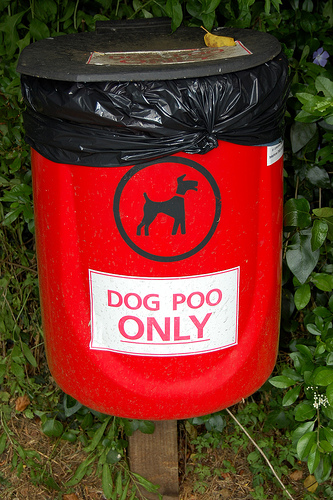
Where there are pets, there is poo.
No one likes doing it but it's got to be dealt with; if you have a caged pet, you are going to have to clean it out regularly, cats use litter boxes that need emptying and dogs need to be picked up after.
It's important to clean up after our pets as their faeces can carry nasty diseases that can affect humans, such as salmonella, toxoplasmosis and giardiasis. Other parasites such as dog roundworms eggs, and sometimes cat roundworms, can get into the human body and can cause stomach upsets, sore throats, asthma and in rare cases blindness. The eggs can remain active in the soil for many years, long after the dog mess has disappeared. This is why it's recommended that you treat your dogs and cats against worms every 3 months.
Everyone knows they need to pick up their dog's poo.Dogs in the UK will produce about 1000 tonnes of faeces every day, so it can't just be left lying around pavements and parks for people to step on or buggy wheels to go through. It's not hard to carry some plastic bags around with you and scoop as necessary. If you get caught short, beg a bag off another dog walker or poke it into the gutter so no one steps in it and come back and deal with it later .
People who do not clean up after their dog can be given a £50 on-the-spot fine. If they refuse to pay the fine, they can be prosecuted and may face a court appearance with a maximum penalty of £1,000
Old cat faeces are especially dangerous to pregnant women and people with weakened immune systems as they can transmit toxoplasmosis, a parasite that rarely causes problems in healthy adults.
Cat owners should make an effort to encourage their pets not to use the neighbours garden as a toilet. If your cats won't use an indoor tray, or you don't want one inside, provide an outside tray for them to use, or set aside a part of the garden filled with sand to use as a toilet. The soiled sand will need to be changed regularly and you'll need to make sure children don't use it as a sand pit, but your non cat-owning neighbours will appreciate you providing your pets with a specific toileting spot.
Waste from any household pet can be put in general waste bin and put out with household rubbish for collection but don't put it out with your garden waste or recycling.
This is a good place to point out that what goes in one end, comes out the other.
If you feed your pet a poor quality, cheap pet food, the end product will be large quantities of soft, badly formed and hard to pick up faecal matter. One of the many advantages to feeding a good quality pet food is that you have far less waste to deal with, and what there is, has less smell so is less unpleasant to scoop.
No one likes doing it but it's got to be dealt with; if you have a caged pet, you are going to have to clean it out regularly, cats use litter boxes that need emptying and dogs need to be picked up after.
It's important to clean up after our pets as their faeces can carry nasty diseases that can affect humans, such as salmonella, toxoplasmosis and giardiasis. Other parasites such as dog roundworms eggs, and sometimes cat roundworms, can get into the human body and can cause stomach upsets, sore throats, asthma and in rare cases blindness. The eggs can remain active in the soil for many years, long after the dog mess has disappeared. This is why it's recommended that you treat your dogs and cats against worms every 3 months.
Everyone knows they need to pick up their dog's poo.Dogs in the UK will produce about 1000 tonnes of faeces every day, so it can't just be left lying around pavements and parks for people to step on or buggy wheels to go through. It's not hard to carry some plastic bags around with you and scoop as necessary. If you get caught short, beg a bag off another dog walker or poke it into the gutter so no one steps in it and come back and deal with it later .
People who do not clean up after their dog can be given a £50 on-the-spot fine. If they refuse to pay the fine, they can be prosecuted and may face a court appearance with a maximum penalty of £1,000
![]() |
| Photo by Flickr user timparkinson |
Old cat faeces are especially dangerous to pregnant women and people with weakened immune systems as they can transmit toxoplasmosis, a parasite that rarely causes problems in healthy adults.
Cat owners should make an effort to encourage their pets not to use the neighbours garden as a toilet. If your cats won't use an indoor tray, or you don't want one inside, provide an outside tray for them to use, or set aside a part of the garden filled with sand to use as a toilet. The soiled sand will need to be changed regularly and you'll need to make sure children don't use it as a sand pit, but your non cat-owning neighbours will appreciate you providing your pets with a specific toileting spot.
Waste from any household pet can be put in general waste bin and put out with household rubbish for collection but don't put it out with your garden waste or recycling.
This is a good place to point out that what goes in one end, comes out the other.
If you feed your pet a poor quality, cheap pet food, the end product will be large quantities of soft, badly formed and hard to pick up faecal matter. One of the many advantages to feeding a good quality pet food is that you have far less waste to deal with, and what there is, has less smell so is less unpleasant to scoop.
Subscribe to:
Posts (Atom)