Sunday, 12 June 2011

Monday, 6 June 2011
How Not To Be A Good Dog Owner.
I've just been to the park to walk the dogs while it's not raining.
While there I met up with a lady who owns a one eyed lurcher and we had a chat because her dog is now a one-eyed, 3-legged lurcher. The dog developed bone cancer in one of her hind legs and although has had it amputated, she's doing really well. She's now a very distinctive dog and I doubt her owner gets far on their walks before someone asks about her pet.
This lovely lady took one look at The Lurcher and said, 'Oh, she's been in the wars too'.
At first I couldn't work out what she was talking about and then I realised she was pointing to the 2 remaining staples in the almost-healed wound on her side. This not the wound she got from jumping into a tree, but the one that was inflicted by The Old Boy, about a week later.
The Lurcher likes to tease our older dog but is sometimes just that bit slow about getting out of the way, and The Old Boy's teeth are still sharp enough to do some damage. It hadn't been a very big hole, so I left it for a couple of days before I decided I did probably did need to intervene. So The Lurcher had a light sedation, and I cleaned and stapled her up on one side, and removed the staples from the other side at the same time.
The first 'bad-owner' thing I did, was not leave an Elizabethan Collar, or 'lampshade' on her for long enough. The Lurcher is devastating with one of these one, marking furniture, knocking down children and damaging shins as she goes. So I took it off after a couple of hours and as a result she ate 3 of the staples out herself.
The second was leaving the staples in for too long. I should have removed them about a week ago but was distracted by half term. The remaining 2 staples were firmly embedded in the skin and one had turned back to front as a result of her harassment. They were more difficult to remove than they should have been
But it was all okay in the end despite my 'bad owner' tendencies. But I'm a vet and can fix things if it all goes wrong. I'd advise you to listen to your vet when it comes to Elizabethan collars and suture/ staple removal..
The other example of a Bad Dog Owner I want to bring to you today, isn't me.
On the way home I spotted a big, white dog ambling along the footpath, who then strolled out into the middle of the road and stood there. I parked the car and he walked back onto the pavement. A lady with a couple of small, toy breeds came out of the park entrance and I asked her if she'd seen anyone looking for a dog.
There was no one obviously looking for a dog in the park, but it seemed to be hanging around a particular house on the street, so I knocked on the door. There was no reply so I got a lead onto its choke chain so it couldn't wander off again.
He was a big, handsome boxer/ mastiff type dog and seemed quite young. I didn't quite trust him though, he was an unneutered male and was nervous, which can turn to aggression when a dog feels threatened.
The lady with the small dogs lived nearby, so she dropped her pets home and came back with some friends, one of whom offered to walk the dog down to the closest vet clinic where it could be scanned to see if it had a microchip. The dog was not keen on getting into my car, and there was no way we were going to be able to force him!
I drove down ahead of them, and about 10 mins later the guy turned up with my lead, but no dog! It seems the owner met them as he was walking back from the shops and was hugely aggressive about the fact that some stranger had his dog. Luckily our good Samaritan was okay about being abused for his attempt at a good deed but it certainly makes me wary about trying to help in this situation again.
But lessons to be learnt from this are : make sure your dog can't get out of the garden, make sure your dog has a collar with a name tag on and make sure it's microchipped.
I would lay money on the fact this dog wasn't chipped, which means it would have been picked up by the dog warden from the vet clinic, and probably ended up in Battersea by the end of the day. If the owner was keen to get it back, he would have found him in the end but it would have cost him a bit of time and some money as well.
While there I met up with a lady who owns a one eyed lurcher and we had a chat because her dog is now a one-eyed, 3-legged lurcher. The dog developed bone cancer in one of her hind legs and although has had it amputated, she's doing really well. She's now a very distinctive dog and I doubt her owner gets far on their walks before someone asks about her pet.
This lovely lady took one look at The Lurcher and said, 'Oh, she's been in the wars too'.
At first I couldn't work out what she was talking about and then I realised she was pointing to the 2 remaining staples in the almost-healed wound on her side. This not the wound she got from jumping into a tree, but the one that was inflicted by The Old Boy, about a week later.
The Lurcher likes to tease our older dog but is sometimes just that bit slow about getting out of the way, and The Old Boy's teeth are still sharp enough to do some damage. It hadn't been a very big hole, so I left it for a couple of days before I decided I did probably did need to intervene. So The Lurcher had a light sedation, and I cleaned and stapled her up on one side, and removed the staples from the other side at the same time.
The first 'bad-owner' thing I did, was not leave an Elizabethan Collar, or 'lampshade' on her for long enough. The Lurcher is devastating with one of these one, marking furniture, knocking down children and damaging shins as she goes. So I took it off after a couple of hours and as a result she ate 3 of the staples out herself.
The second was leaving the staples in for too long. I should have removed them about a week ago but was distracted by half term. The remaining 2 staples were firmly embedded in the skin and one had turned back to front as a result of her harassment. They were more difficult to remove than they should have been
But it was all okay in the end despite my 'bad owner' tendencies. But I'm a vet and can fix things if it all goes wrong. I'd advise you to listen to your vet when it comes to Elizabethan collars and suture/ staple removal..
The other example of a Bad Dog Owner I want to bring to you today, isn't me.
On the way home I spotted a big, white dog ambling along the footpath, who then strolled out into the middle of the road and stood there. I parked the car and he walked back onto the pavement. A lady with a couple of small, toy breeds came out of the park entrance and I asked her if she'd seen anyone looking for a dog.
There was no one obviously looking for a dog in the park, but it seemed to be hanging around a particular house on the street, so I knocked on the door. There was no reply so I got a lead onto its choke chain so it couldn't wander off again.
He was a big, handsome boxer/ mastiff type dog and seemed quite young. I didn't quite trust him though, he was an unneutered male and was nervous, which can turn to aggression when a dog feels threatened.
The lady with the small dogs lived nearby, so she dropped her pets home and came back with some friends, one of whom offered to walk the dog down to the closest vet clinic where it could be scanned to see if it had a microchip. The dog was not keen on getting into my car, and there was no way we were going to be able to force him!
I drove down ahead of them, and about 10 mins later the guy turned up with my lead, but no dog! It seems the owner met them as he was walking back from the shops and was hugely aggressive about the fact that some stranger had his dog. Luckily our good Samaritan was okay about being abused for his attempt at a good deed but it certainly makes me wary about trying to help in this situation again.
But lessons to be learnt from this are : make sure your dog can't get out of the garden, make sure your dog has a collar with a name tag on and make sure it's microchipped.
I would lay money on the fact this dog wasn't chipped, which means it would have been picked up by the dog warden from the vet clinic, and probably ended up in Battersea by the end of the day. If the owner was keen to get it back, he would have found him in the end but it would have cost him a bit of time and some money as well.
Monday, 23 May 2011
It's Rabbit Awareness Week.
Years ago, rabbits were childrens' pets. No one thought twice about sentencing them to a dreary life at the bottom of the garden in a tiny cage, because no one knew any better.
Most vets had no idea what to do with a rabbit and treated them as small dogs or as cats.Animal behaviourists considered them stupid and boring, and beneath their notice.
Now all that has changed.
We now know that rabbits are very different from cats and dogs. They are prey animals rather than predators and as such have very specific behavioural and environmental needs. They are herbivores, not carnivores and they need lots of exercise and lots of fibre. And they need company, preferably in the form of another rabbit.
Rabbits come in a variety of shapes and sizes and can be kept indoors and outdoors. This versatility has made them the 3rd most popular pet in the UK, behind cats and dogs. Britons keep 2 million rabbits as pets and one recent study estimates that 75% of these are not having their basic welfare needs met by their owners.
As a bunny owner, there are 5 areas you must meet your pets requirements for. If you have a rabbit as a pet, or are considering getting one, please read on to see if you are really giving your pet all it deserves.
Environment
In the wild, rabbits have a large territory and exercise and feed in. This keeps them happy and healthy.
Rabbits require a hutch for warmth and shelter, but should never be confined to it 24/7. They need a run attached to their hutch; this should be tall enough to allow the rabbits to stretch up to full height and they should be able to run, rather than just hop. A suggested minimum size of run for most rabbits is 8ft x 4ft x 2ft high.
Behaviour
Rabbits are intelligent and social animals, but have only been recently domesticated so their needs are very close to those of their wild relatives. They need a large enclosure and opportunities to run, dig and jump. They need to be able to hide if scared, and a change of scenery every so often. Regularly rotating their toys, and introducing new ones regularly will help prevent boredom.
Company
Rabbits are happiest with the company of their bonded bunny or a small friendly group. The best combination is a neutered male/female pair or two neutered females. Un-neutered does often go on to develop uterine cancer, and can be very grumpy so it's best for everyone if they are spayed.
Rabbits shouldn't be kept with guinea pigs, as they often bully them and have different dietary needs.
Humans shouldn't replace another bunny for companionship but often provide a welcome supplement.
Health
As for most pets, there is a long list of things that can cause a rabbit to be unwell. Most vets these days have some idea of how to treat common bunny diseases but it's always worthwhile asking around to see if there is a vet who is especially interested in rabbits near you.
Treatment can be involved and expensive.Some pet insurance companies do offer policies for rabbits, and you might want to consider taking some out.
Rabbits are fragile and flighty, and can break bones very easily, so if your pet suddenly seems lame or reluctant to move, you need to see a vet pretty quickly. Many rabbits hurt themselves leaping out of their owner's arms after being picked up, so it's wiser to leave them on the ground. If you have to cuddle them, sit on the ground and let them come to you.
A rabbit that isn't eating is in serious trouble and should get medical attention as soon as possible. If they don't have food coming in to their stomach, their gut stops moving and they can quickly die.
A lot of rabbits have teeth problems which cause them pain and illness. Bad breeding is a common cause of dental dysfunction as is a poor diet with not enough fibre in it.
Keep an eye on their poos. You should see round, hard individual pellets but if you see long strings of pellets stuck together or watery faeces then, again, see your vet.
All bunnies should be checked around their rear ends at least daily, as fly strike can develop within hours; but if you have a rabbit with diarrhoea or open sores, they need to be kept clean and checked twice a day. You can get fly repellent which can be applied to bunnies and will help keep them fly-larvae free, and fly netting around their cages can also be useful.
All bunnies should be micro chipped, in case they escape and vaccinated against Myxomatosis and Viral Haemorrhagic Disease, which are spread through flying insects.
Diet
70% of a wild rabbit's time above ground is spent foraging for high fiber foods, such as grass and plant. The continual chewing helps grind down the rabbit's constantly growing teeth and keeps their gut healthy.
Good quality grass and hay should make up the majority of your rabbit's diet. The remainder should be small amounts of extruded pellets and a few bits of fresh vegetable.
If you want more detailed information on any of these welfare areas, then check out the Rabbit Awareness Week website. You will find lots of information on all aspects of Bunny care, as well as details of Rabbit Awareness Week events near you.
Most vets had no idea what to do with a rabbit and treated them as small dogs or as cats.Animal behaviourists considered them stupid and boring, and beneath their notice.
Now all that has changed.
We now know that rabbits are very different from cats and dogs. They are prey animals rather than predators and as such have very specific behavioural and environmental needs. They are herbivores, not carnivores and they need lots of exercise and lots of fibre. And they need company, preferably in the form of another rabbit.
Rabbits come in a variety of shapes and sizes and can be kept indoors and outdoors. This versatility has made them the 3rd most popular pet in the UK, behind cats and dogs. Britons keep 2 million rabbits as pets and one recent study estimates that 75% of these are not having their basic welfare needs met by their owners.
As a bunny owner, there are 5 areas you must meet your pets requirements for. If you have a rabbit as a pet, or are considering getting one, please read on to see if you are really giving your pet all it deserves.
Environment
In the wild, rabbits have a large territory and exercise and feed in. This keeps them happy and healthy.
Rabbits require a hutch for warmth and shelter, but should never be confined to it 24/7. They need a run attached to their hutch; this should be tall enough to allow the rabbits to stretch up to full height and they should be able to run, rather than just hop. A suggested minimum size of run for most rabbits is 8ft x 4ft x 2ft high.
Behaviour
Rabbits are intelligent and social animals, but have only been recently domesticated so their needs are very close to those of their wild relatives. They need a large enclosure and opportunities to run, dig and jump. They need to be able to hide if scared, and a change of scenery every so often. Regularly rotating their toys, and introducing new ones regularly will help prevent boredom.
Company
Rabbits are happiest with the company of their bonded bunny or a small friendly group. The best combination is a neutered male/female pair or two neutered females. Un-neutered does often go on to develop uterine cancer, and can be very grumpy so it's best for everyone if they are spayed.
Rabbits shouldn't be kept with guinea pigs, as they often bully them and have different dietary needs.
Humans shouldn't replace another bunny for companionship but often provide a welcome supplement.
Health
As for most pets, there is a long list of things that can cause a rabbit to be unwell. Most vets these days have some idea of how to treat common bunny diseases but it's always worthwhile asking around to see if there is a vet who is especially interested in rabbits near you.
Treatment can be involved and expensive.Some pet insurance companies do offer policies for rabbits, and you might want to consider taking some out.
Rabbits are fragile and flighty, and can break bones very easily, so if your pet suddenly seems lame or reluctant to move, you need to see a vet pretty quickly. Many rabbits hurt themselves leaping out of their owner's arms after being picked up, so it's wiser to leave them on the ground. If you have to cuddle them, sit on the ground and let them come to you.
A rabbit that isn't eating is in serious trouble and should get medical attention as soon as possible. If they don't have food coming in to their stomach, their gut stops moving and they can quickly die.
A lot of rabbits have teeth problems which cause them pain and illness. Bad breeding is a common cause of dental dysfunction as is a poor diet with not enough fibre in it.
Keep an eye on their poos. You should see round, hard individual pellets but if you see long strings of pellets stuck together or watery faeces then, again, see your vet.
All bunnies should be checked around their rear ends at least daily, as fly strike can develop within hours; but if you have a rabbit with diarrhoea or open sores, they need to be kept clean and checked twice a day. You can get fly repellent which can be applied to bunnies and will help keep them fly-larvae free, and fly netting around their cages can also be useful.
All bunnies should be micro chipped, in case they escape and vaccinated against Myxomatosis and Viral Haemorrhagic Disease, which are spread through flying insects.
Diet
70% of a wild rabbit's time above ground is spent foraging for high fiber foods, such as grass and plant. The continual chewing helps grind down the rabbit's constantly growing teeth and keeps their gut healthy.
Good quality grass and hay should make up the majority of your rabbit's diet. The remainder should be small amounts of extruded pellets and a few bits of fresh vegetable.
If you want more detailed information on any of these welfare areas, then check out the Rabbit Awareness Week website. You will find lots of information on all aspects of Bunny care, as well as details of Rabbit Awareness Week events near you.
Friday, 13 May 2011
When Dogs And Trees Collide.
I dared to go into London on my own yesterday and got a phone call towards the end of the conference I was attending.
It was the dog walker saying The Lurcher had bounced sideways and got stuck on a tree. Then she had bounced off again and torn a couple of holes in herself.
It's not much good being a vet when you are an hour away from your injured dog, and anyhow it was too bad an injury for me to attempt to repair at home, so I sent her off to a friend of mine.
By the time I got home, she had been cleaned up and the wound had been stapled together.

She was recovering from her sedation but still a bit wobbly and once we got back to the house she retired to the pool cover.

Today she's fine. I had her on the lead in the park but she's been doing speed laps of the garden this afternoon to make up for it. She is a dog of very little brain.
It was the dog walker saying The Lurcher had bounced sideways and got stuck on a tree. Then she had bounced off again and torn a couple of holes in herself.
It's not much good being a vet when you are an hour away from your injured dog, and anyhow it was too bad an injury for me to attempt to repair at home, so I sent her off to a friend of mine.
By the time I got home, she had been cleaned up and the wound had been stapled together.

She was recovering from her sedation but still a bit wobbly and once we got back to the house she retired to the pool cover.

Today she's fine. I had her on the lead in the park but she's been doing speed laps of the garden this afternoon to make up for it. She is a dog of very little brain.
Wednesday, 11 May 2011
Mix With Care
Some pets just should not be kept under the same roof.
The trouble is there are no hard and fast rules about what combinations will, and won't, work and sometimes it's just a matter of try it and see.
For example we have the Lurcher and we used to have 2 cats. Some lurchers and greyhounds get on fine with cats, others can't live in a house with them, or any small furry animals, because of their excessive prey drive. We got our lurcher as a puppy, and she was brought up around a number of different animals, so the chances were good that she would learn not to chase our cats.
Unfortunately we had not reckoned with the temperament of our cats. Our cats have lived with the Old Boy, our 9 year old collie cross, for years, without any inter species friction. But along came the puppy, who yapped a bit, the cats took off, the puppy chased them, and so a habit was born.
If even one of our cats had been a bit tougher, and given the Lurcher a sharp whack across the nose for being so nosey or just stayed sleeping, rather than fleeing the room I'm sure things would have been different.
But now we have two cats who refuse to enter the house but deign to enter our separate utility room now and again. We leave food out for them and replace it when necessary, but they are obviously eating elsewhere as 7.5 kgs of dried food has now lasted us almost a year!
And I can now tell you exactly how embarrassing it is to have a neighbour from across-the-way and down-a-bit come over to you and ask if you can scan the 'stray' cat that's been hanging around their house for the last few months, for a microchip.Of course, I didn't need to scan it; when she described the big ginger tom that was camping out at theirs, I knew it was one of ours.
You can't tell a cat where to live, so while she doesn't want to adopt Ginger, she's agreed to feed him for us and will notify me if he needs any veterinary attention.
We don't know where our other cat is eating, but it's obviously somewhere with generous proportions as he's looking a lot rounder than he used to. He is long haired and really needs regular grooming, but obviously isn't getting this atm so needs to have his knots shaved. I'm going to have to wait until I find him in the utility room to have a go at sedating him so I can give him a good grooming.
On the other hand, we have rats, and used to have guinea pigs, that the Lurcher has showed no interest in at all. It's only cats she hates; this is something it would have been useful to know before we got her.
Cats are a common factor in many inter species problems as they can be both 'prey' and 'predator'.
Many a pet rodent, bird or fish has met it's end via the family cat. I've also been told a story about a family cat who ate 3 newborn chihuahua pups, when the owners were out at work. I'm inclined to believe it; puppies of that size would make a convenient meal for a cat bored with dried biscuits.
This doesn't mean you can't have a bird/rodent/fish if you have a cat, but be sensible. Don't let the prey species roam freely around a room/house with a cat in it. Not even if it's a geriatric cat with arthritis and kidney failure. Cats are killing machines and some will respond energetically to the presence of prey even while on deaths door.
Make sure the cage or tank you use to house your small pets is sturdy enough to keep the possible victim in, and the cat out. It's a case of you get what you pay for. Bars are better than plastic enclosures for small furries, but check the clips that hold bars to plastic trays are not going to give way to a determined cat. It's a good idea to keep the cage in a room that can be closed off from other pets when the house is empty of humans.
Our cats were regular hunters of mice and brought in the odd bird, but they were uninterested in both the rats and guinea pigs that shared our house with them.
It goes to show that you just can't tell.
.
Wednesday, 27 April 2011
Back To Reality.
We've been out of the country over Easter, and one of the countries our family visited was Sri Lanka.
We've been to Asia a few times in the past, but only to places like Hong Kong and Singapore, during stopovers on long-haul flights. Sri Lanka was a new experience for us.
Driving through Colombo, we saw how genuinely poor people live; crowded into makeshift wooden shelters that most people in the UK would be ashamed to have as a garden shed.
When we travelled south to our villa, just out of Galle, people seemed slightly better off. The walls of their houses were made of concrete blocks, and the roofs looked at least waterproof. There still seemed to be too many people to possibly live in one small room, but the houses looked solid, permanent.
In the area we stayed in, there were a lot of ruined buildings especially on the coast road. Of course these were remnants of the 2004 Tsunami, in which at least 30 000 people died.
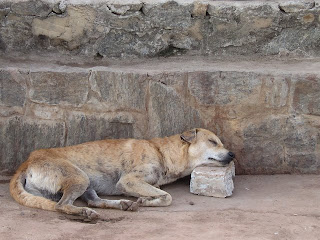
Sri Lanka has many stray dogs. We did see some dogs wearing collars, but if they were pets they seemed to spend a lot of time wandering along the roads with all the rest.
Most of the dogs we saw were obviously unowned, with signs of skin disease and lameness but there were very few that looked like walking skeletons. Most seem to get enough to eat by hanging around restaurants, hotels, villages and temples.

Dogs in Sri Lanka appear to have a lot more road sense than dogs in the UK. I saw many of them check the road for vehicles before stepping out into the traffic but I guess they learn this the hard way.

And you'll see by my photos, that a lot of these dogs look similar. The ones we saw were all the size of small Labradors and most had a short coat in some shade of brown.We did see a couple of German Shepherds at a guest house, but I'm pretty sure they must have been imported from somewhere. And we did see one smaller dog, living on an island that had a black and white shaggy coat; so was maybe a collie cross of some kind? No one spoke enough English to satisfy my curiosity, so I'll just have keep wondering.
 I asked our driver what people did if they found an ill or injured dog and it seems ill dogs are avoided due to the risk of rabies. He did mention the possibility of taking an injured one to a vet, but most vets specialise in farm animals, so are mainly concerned with production. in most areas, there simply isn't usually the money available for specialised equipment or drugs for companion animals.
Many people in the UK consider their pets a right, not a luxury, but a visit to a less wealthy country should be able to convince most reasonable people otherwise. We didn't witness any animal cruelty on our travels, but it's obvious that people in Sri Lanka struggle to provide their families with the basic necessities of life, so the needs of animals such as dogs must be way down that list.
We've been to Asia a few times in the past, but only to places like Hong Kong and Singapore, during stopovers on long-haul flights. Sri Lanka was a new experience for us.
Driving through Colombo, we saw how genuinely poor people live; crowded into makeshift wooden shelters that most people in the UK would be ashamed to have as a garden shed.
When we travelled south to our villa, just out of Galle, people seemed slightly better off. The walls of their houses were made of concrete blocks, and the roofs looked at least waterproof. There still seemed to be too many people to possibly live in one small room, but the houses looked solid, permanent.
In the area we stayed in, there were a lot of ruined buildings especially on the coast road. Of course these were remnants of the 2004 Tsunami, in which at least 30 000 people died.

Sri Lanka has many stray dogs. We did see some dogs wearing collars, but if they were pets they seemed to spend a lot of time wandering along the roads with all the rest.
Most of the dogs we saw were obviously unowned, with signs of skin disease and lameness but there were very few that looked like walking skeletons. Most seem to get enough to eat by hanging around restaurants, hotels, villages and temples.

Dogs in Sri Lanka appear to have a lot more road sense than dogs in the UK. I saw many of them check the road for vehicles before stepping out into the traffic but I guess they learn this the hard way.

And you'll see by my photos, that a lot of these dogs look similar. The ones we saw were all the size of small Labradors and most had a short coat in some shade of brown.We did see a couple of German Shepherds at a guest house, but I'm pretty sure they must have been imported from somewhere. And we did see one smaller dog, living on an island that had a black and white shaggy coat; so was maybe a collie cross of some kind? No one spoke enough English to satisfy my curiosity, so I'll just have keep wondering.

Many people in the UK consider their pets a right, not a luxury, but a visit to a less wealthy country should be able to convince most reasonable people otherwise. We didn't witness any animal cruelty on our travels, but it's obvious that people in Sri Lanka struggle to provide their families with the basic necessities of life, so the needs of animals such as dogs must be way down that list.
Saturday, 2 April 2011
I Hope They Name Him 'Lucky'.
http://www.bbc.co.uk/news/world-asia-pacific-12944317
Coastguards patrolling the coastline of Japan for survivors that may have been washed out to sea by the tsunami that hit the country's north-east coast three weeks ago, have rescued a dog found living on the roof of a floating house.
If you watch the video found in the link above, you can see that the dog is obviously hungry but appears otherwise healthy.
This must be the luckiest dog on the planet, surely?
Coastguards patrolling the coastline of Japan for survivors that may have been washed out to sea by the tsunami that hit the country's north-east coast three weeks ago, have rescued a dog found living on the roof of a floating house.
If you watch the video found in the link above, you can see that the dog is obviously hungry but appears otherwise healthy.
This must be the luckiest dog on the planet, surely?
Wednesday, 30 March 2011
Read My Guest Posts
The Visiting Vet has done a few guest posts lately, one at Mum’s The Word and now one at Little Mummy. If you haven’t already, go and have a read of them and please, leave a comment to let me know what you think.
Tuesday, 29 March 2011
There Is No Immunity For Vets.
Being a vet can is an emotionally draining job.
Our patients are rarely 'just animals' to us and we often get more involved than is probably wise. We celebrate when things go well and someones pet is made well again, and grieve alongside the owner when results are not what we wished for and then again when all hope is lost.
We all have lost sleep over cases that have had less than ideal outcomes, and have wondered if we could have done things differently. We have moments of self doubt and sometimes advising clients on what they 'should do' makes us feel completely inadequate.
Of course, unless the patient is in agony, with no hope of recovery, we can't tell you what to do with your pet. There are almost always choices to be made, and unfortunately we often need to run more tests, which cost more money- money, clients sometimes don't have readily available.
And even if the tests are affordable, should they be done? Are they invasive? What will they tell us? Will we be able to fix the problem? These are questions clients ask us and we ask ourselves every day.
Today The Old Boy went down the road to a local surgery to have a broken tooth out and a couple of lumps removed. The lumps were cysts and the sore tooth won't trouble him again but his blood results show some abnormalities. His liver isn't not be doing its job properly and his kidneys aren't what they used to be. I was trying to listen to his blood chemistry results during the school pick up this afternoon, and then didn't have a chance to ring back later. I'll find out more tomorrow. But it's clear all is not well with him.
The weight loss I've noticed probably isn't down to an improved exercise regime after all, and that panting I've noticed may have another cause rather than sitting next to the radiator. The Old Boy is 10, and had a spinal stroke in 2009. He sleeps a lot these days and can't get in the car without assistance, but is happy to eat his food and come for walks with The Lurcher. I want him to have a good quality of life, I don't want him to waste away in a corner.
There are tough decisions ahead for our household and I too will be seeking advice from vets. I will ask my colleagues ' What would you do?'They will offer me words but I know they can't really help me.
It's going to be me that has to make the ultimate decision. It's such a hard thing to do.
Even for a vet.
Friday, 25 March 2011
TVIL: Should I spay my bitch?
I received this question via email from someone who follows me on twitter but for some technical reason I haven't been able to email them a reply. Sometimes my computer doesn't like AOL addresses, sorry.
So I'm popping it up on here in the hope that the person who emailed me reads it. Let me know if you do! Hopefully my answer to you might help other people to decide whether to spay their bitches, or not, as well.
Dear Jacq
Dear S,
So I'm popping it up on here in the hope that the person who emailed me reads it. Let me know if you do! Hopefully my answer to you might help other people to decide whether to spay their bitches, or not, as well.
Dear Jacq
I wonder if you would be so kind to advise me about my little rescue whippet cross (aged 3-5yrs approx).
When I saw her at Battersea Dogs Home (Christmas just gone), I was advised that they would spay her before I took her home. Then, on the morning of the op, they called to say that they had found a mid-line scar and were certain she'd already been spayed (They did say that if for some reason they were wrong, they would spay for free), so off I went to collect her. When I got her home and she rolled over on my bed, I had a good look and saw no sign of a scar. Low and behold, within a week of being home, she came into season. So, now I have the spaying dilema. I had my previous greyhound bitch spayed, as I also had an entire boy greyhound at the time. She was very sorry for herself after the spaying, for quite some time, and I felt awful for putting her through it.
My dilema is that I feel like I'm having her spayed for my own convenience, for boy dog hassle free walks etc, as I no longer have a male dog at home. I know all about pyometra and mammary tumours, so I know that it would be good for her in that respect. The last dog I had spayed was about 13 years ago, so I imagine the procedure may have advanced since then.
Please could you tell me your thoughts on spaying and how long they take to recover etc.
Kind Regards and thank you in advance, S
Dear S,
I do think you should have her spayed.
It might be invasive surgery but is very routine these days. You can specifically request that an experienced vet does the surgery, and check she will be given pain relief during the surgery so she wakes up pain free. Hounds aren't the bravest dogs in the world ( I have one myself!) so ask if you can have some pain relief for the next few days post op. The anaesthetics used these days ( as opposed to 13 years ago) are much easier on the dogs,so they have less of a hangover.
You can expect your bitch to be a little subdued for a couple of days but by day 3-4 you will probably have trouble keeping her on lead.
Most vets like to wait until 3 months after the last season to spay a bitch. This is to minimise blood loss and prevent a large drop in hormone levels once the reproductive system is removed.
Any risks of spaying are firmly outweighed by the advantages. Your pet will have no chance of contracting uterine or ovarian cancer and her chances of developing breast cancer are also lessoned. Pyometra is an infection of the womb that most commonly occurs in middle aged bitches. After each season without pregnancy, the lining of the uterus thickens a little and it is these changes that cause pyometra to develop 1-2 months after her heat. A bitch with pyometra will need spaying but the surgery will cost at least twice as much as the routine equivalent, as your pet will need antibiotics and iv fluids, and the surgery is more complicated. She will have a bigger scar and will take longer to recover. Some affected dogs need hospitilisation and more intensive nursing and in some cases a bitch with pyometra will die.
A spayed bitch can not get accidently pregnant, leaving you with puppies to rear and find homes with and she is less likely to get stolen for breeding purposes. This is a very common problem with sight hounds unfortunately.
As you can see, spaying a bitch is not just a matter of convenience for you, but is important for her health as well. She will have a couple of quiet days but hopefully will bounce back from her operation very quickly compared to your last greyhound.
Best of luck with whatever you decide.
Jacq
Thursday, 24 March 2011
Think Twice About Touching WIldlife.
Today I'm guest posting over Mum's The Word about what to do if you find an abandoned wild animal this spring.
Check it out here
Check it out here
Tuesday, 22 March 2011
Poo!
Where there are pets, there is poo.
No one likes doing it but it's got to be dealt with; if you have a caged pet, you are going to have to clean it out regularly, cats use litter boxes that need emptying and dogs need to be picked up after.
It's important to clean up after our pets as their faeces can carry nasty diseases that can affect humans, such as salmonella, toxoplasmosis and giardiasis. Other parasites such as dog roundworms eggs, and sometimes cat roundworms, can get into the human body and can cause stomach upsets, sore throats, asthma and in rare cases blindness. The eggs can remain active in the soil for many years, long after the dog mess has disappeared. This is why it's recommended that you treat your dogs and cats against worms every 3 months.
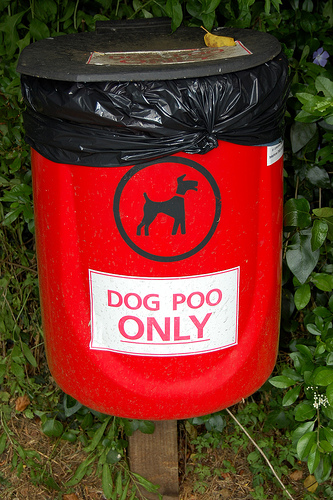
Everyone knows they need to pick up their dog's poo.Dogs in the UK will produce about 1000 tonnes of faeces every day, so it can't just be left lying around pavements and parks for people to step on or buggy wheels to go through. It's not hard to carry some plastic bags around with you and scoop as necessary. If you get caught short, beg a bag off another dog walker or poke it into the gutter so no one steps in it and come back and deal with it later .
People who do not clean up after their dog can be given a £50 on-the-spot fine. If they refuse to pay the fine, they can be prosecuted and may face a court appearance with a maximum penalty of £1,000
Old cat faeces are especially dangerous to pregnant women and people with weakened immune systems as they can transmit toxoplasmosis, a parasite that rarely causes problems in healthy adults.
Cat owners should make an effort to encourage their pets not to use the neighbours garden as a toilet. If your cats won't use an indoor tray, or you don't want one inside, provide an outside tray for them to use, or set aside a part of the garden filled with sand to use as a toilet. The soiled sand will need to be changed regularly and you'll need to make sure children don't use it as a sand pit, but your non cat-owning neighbours will appreciate you providing your pets with a specific toileting spot.
Waste from any household pet can be put in general waste bin and put out with household rubbish for collection but don't put it out with your garden waste or recycling.
This is a good place to point out that what goes in one end, comes out the other.
If you feed your pet a poor quality, cheap pet food, the end product will be large quantities of soft, badly formed and hard to pick up faecal matter. One of the many advantages to feeding a good quality pet food is that you have far less waste to deal with, and what there is, has less smell so is less unpleasant to scoop.
No one likes doing it but it's got to be dealt with; if you have a caged pet, you are going to have to clean it out regularly, cats use litter boxes that need emptying and dogs need to be picked up after.
It's important to clean up after our pets as their faeces can carry nasty diseases that can affect humans, such as salmonella, toxoplasmosis and giardiasis. Other parasites such as dog roundworms eggs, and sometimes cat roundworms, can get into the human body and can cause stomach upsets, sore throats, asthma and in rare cases blindness. The eggs can remain active in the soil for many years, long after the dog mess has disappeared. This is why it's recommended that you treat your dogs and cats against worms every 3 months.
Everyone knows they need to pick up their dog's poo.Dogs in the UK will produce about 1000 tonnes of faeces every day, so it can't just be left lying around pavements and parks for people to step on or buggy wheels to go through. It's not hard to carry some plastic bags around with you and scoop as necessary. If you get caught short, beg a bag off another dog walker or poke it into the gutter so no one steps in it and come back and deal with it later .
People who do not clean up after their dog can be given a £50 on-the-spot fine. If they refuse to pay the fine, they can be prosecuted and may face a court appearance with a maximum penalty of £1,000
 |
| Photo by Flickr user timparkinson |
Old cat faeces are especially dangerous to pregnant women and people with weakened immune systems as they can transmit toxoplasmosis, a parasite that rarely causes problems in healthy adults.
Cat owners should make an effort to encourage their pets not to use the neighbours garden as a toilet. If your cats won't use an indoor tray, or you don't want one inside, provide an outside tray for them to use, or set aside a part of the garden filled with sand to use as a toilet. The soiled sand will need to be changed regularly and you'll need to make sure children don't use it as a sand pit, but your non cat-owning neighbours will appreciate you providing your pets with a specific toileting spot.
Waste from any household pet can be put in general waste bin and put out with household rubbish for collection but don't put it out with your garden waste or recycling.
This is a good place to point out that what goes in one end, comes out the other.
If you feed your pet a poor quality, cheap pet food, the end product will be large quantities of soft, badly formed and hard to pick up faecal matter. One of the many advantages to feeding a good quality pet food is that you have far less waste to deal with, and what there is, has less smell so is less unpleasant to scoop.
Friday, 18 March 2011
The Fleas Are Here.
This is a gentle reminder for those of you who stop treating your pets regularly for fleas over the winter.
I've seen three animals with obvious fleas over the last week, and one of them belonged to me!
So start treating, but first check you are treating effectively:
Buy something that works.
Don't bother with the many cheap flea 'repellents' sold in supermarkets and pet shops. They may scare off the odd, half-hearted flea but if you have an infestation you might as well flush your money down the loo.
I recommend Advantage, Frontline, Stronghold or Advocate. These monthly spot on treatments can be bought from your vet, some pet shops and on-line (some require a prescription).Some suit different pets better than others, so try another if you aren't happy with the one you are using.
Swap treatments every now and again to prevent resistance developing.
If you are treating because you've noticed fleas, then worm your pet with something that treats tapeworms at the same time.
Make sure you are using the right strength.
You'll need a rough idea of what your pet weighs especially if they are at the upper or lower limit for a pack.
Seek advice if you aren't sure what strength pack to get. These products are usually very safe and it's hard to overdose your pet with them but it's better to be safe than sorry. And under dosing puts your pet at risk of fleas, despite being treated,
Read The Instructions.
The important stuff is printed on that slip of paper that you throw away once you've opened the pack, so hang onto it in case you have any questions later.
The treatments recommended above are all designed to be applied to the back of the neck, between the ears and shoulder blades. This is to stop your pet from being able to lick at the treatment.
Don't treat your pet within 3 days of bathing or swimming as it can reduce the effectiveness of these products.
And remember, treat ALL of the pets in your household if you want to prevent an infestation this summer. It's always cheaper and easier to treat regularly, than deal with a major flea problem.
I've seen three animals with obvious fleas over the last week, and one of them belonged to me!
So start treating, but first check you are treating effectively:
Buy something that works.
Don't bother with the many cheap flea 'repellents' sold in supermarkets and pet shops. They may scare off the odd, half-hearted flea but if you have an infestation you might as well flush your money down the loo.
I recommend Advantage, Frontline, Stronghold or Advocate. These monthly spot on treatments can be bought from your vet, some pet shops and on-line (some require a prescription).Some suit different pets better than others, so try another if you aren't happy with the one you are using.
Swap treatments every now and again to prevent resistance developing.
If you are treating because you've noticed fleas, then worm your pet with something that treats tapeworms at the same time.
Make sure you are using the right strength.
You'll need a rough idea of what your pet weighs especially if they are at the upper or lower limit for a pack.
Seek advice if you aren't sure what strength pack to get. These products are usually very safe and it's hard to overdose your pet with them but it's better to be safe than sorry. And under dosing puts your pet at risk of fleas, despite being treated,
Read The Instructions.
The important stuff is printed on that slip of paper that you throw away once you've opened the pack, so hang onto it in case you have any questions later.
The treatments recommended above are all designed to be applied to the back of the neck, between the ears and shoulder blades. This is to stop your pet from being able to lick at the treatment.
Don't treat your pet within 3 days of bathing or swimming as it can reduce the effectiveness of these products.
And remember, treat ALL of the pets in your household if you want to prevent an infestation this summer. It's always cheaper and easier to treat regularly, than deal with a major flea problem.
Tuesday, 15 March 2011
TVIL: How Much Should I Feed My Dog?
How much should I be feeding my English Springer Spaniel, she has a baked bean tin size tin of meat in jelly a day and biscuits left in her dish all the time, some days she doesn't eat them others she'll eat a mug full. Is this the right amount?? She's 2 & weighs 12kg.
Cathy D
Dear Cathy,
'How much should I feed my pet?' is a question I get asked all the time.
No matter what kind of pet is involved my answer is usually the same: Read the Label!
Pet foods vary so wildly in their nutritional content that the only way to be sure you are feeding your pet the 'right' amount is to read the recommended amount specific to the food your pet is eating.
All decent brands will have this information on them somewhere, if you can't find a recommendation then I suggest you swap brands!
If you feed different types of food, ie cans and dried, then you will have to adjust your proportions accordingly.
Cathy, your dog sounds like she is slightly unusual in that she is able to eat only what her body tells her she needs. This is uncommon in dogs and is the reason we don't recommend dogs have free access to food. If you fed a Labrador this way, it would probably go through 15kgs of dried food in a week and quickly start to resemble something that should be upholstered and used as a footrest. Cats are often better at just eating what they need, and no more, but if you notice they are becoming 'cuddly', it's time to feed them a measured amount each day.
Most recommendations are presented as a range of amounts. If your pet is an average size, then start with a middle-of-the-range amount. If your pet is carrying too much weight, then feed at the lower end of the range and if they are on the skinny side, then go for a higher amount.
I don't bother too much with weights as they can be tricky to measure correctly if you don't have proper walk on scales. Learn to score their Body Condition and you can make sure they are getting the right amount of food without fixating on their weight. And if you have a cross breed or a purebred animal that obviously falls outside the norm, then you will know they are the right size when they have a body score of 3. You should be able to feel their ribs just under their skin and their abdomen should look tucked up when they are viewed from side. If their ribs start disappearing, feed them 10% less, and if their spine starts becoming visible then give them 10-20% more.
Cathy's Spaniel is 6 kgs than she should be if you look at the breed standard weight, but is almost certainly not emaciated. Dogs, like people, come in different shapes and frames. Cathy's dog sounds like she has a small frame and so probably has a body score closer to 2 , than 3. This doesn't mean there is a problem. If you think your pet is too thin, no matter what you feed them, it's worth getting them checked out just to make sure they aren't sick. But if they get a clean bill of health from your vet, then don't stress about it. Just accept that your pet is petite but healthy and try not to get too cross when people comment on how skinny they are.
Cathy D
Dear Cathy,
'How much should I feed my pet?' is a question I get asked all the time.
No matter what kind of pet is involved my answer is usually the same: Read the Label!
Pet foods vary so wildly in their nutritional content that the only way to be sure you are feeding your pet the 'right' amount is to read the recommended amount specific to the food your pet is eating.
All decent brands will have this information on them somewhere, if you can't find a recommendation then I suggest you swap brands!
If you feed different types of food, ie cans and dried, then you will have to adjust your proportions accordingly.
Cathy, your dog sounds like she is slightly unusual in that she is able to eat only what her body tells her she needs. This is uncommon in dogs and is the reason we don't recommend dogs have free access to food. If you fed a Labrador this way, it would probably go through 15kgs of dried food in a week and quickly start to resemble something that should be upholstered and used as a footrest. Cats are often better at just eating what they need, and no more, but if you notice they are becoming 'cuddly', it's time to feed them a measured amount each day.
Most recommendations are presented as a range of amounts. If your pet is an average size, then start with a middle-of-the-range amount. If your pet is carrying too much weight, then feed at the lower end of the range and if they are on the skinny side, then go for a higher amount.
I don't bother too much with weights as they can be tricky to measure correctly if you don't have proper walk on scales. Learn to score their Body Condition and you can make sure they are getting the right amount of food without fixating on their weight. And if you have a cross breed or a purebred animal that obviously falls outside the norm, then you will know they are the right size when they have a body score of 3. You should be able to feel their ribs just under their skin and their abdomen should look tucked up when they are viewed from side. If their ribs start disappearing, feed them 10% less, and if their spine starts becoming visible then give them 10-20% more.
Cathy's Spaniel is 6 kgs than she should be if you look at the breed standard weight, but is almost certainly not emaciated. Dogs, like people, come in different shapes and frames. Cathy's dog sounds like she has a small frame and so probably has a body score closer to 2 , than 3. This doesn't mean there is a problem. If you think your pet is too thin, no matter what you feed them, it's worth getting them checked out just to make sure they aren't sick. But if they get a clean bill of health from your vet, then don't stress about it. Just accept that your pet is petite but healthy and try not to get too cross when people comment on how skinny they are.
Friday, 11 March 2011
Make Every Animal A Wanted Pet.
When people find out I'm a vet, someone always brings up the subject of euthanasia.
'I'd like to have been a vet', they say, 'But I couldn't kill things.'
It's not a high point of the job, but when an animal is sick, or in pain and has no quality of life, it's sometimes the only humane option. I make sure the patient has a 'good death' and move on relatively easily.
But I've also had to put healthy, unwanted animals to sleep because there no one wanted them and this part of my job is really hard. When you do it routinely, you do harden yourself to it a little, but it never makes for a good day at work.
Some of these animals have severe behaviour issues that make them unsuitable pets for anyone without extensive experience of 'problem' animals. These damaged animals are the result of poor socialisation, poor breeding and abuse and often there is very little that can be done to help them. Rescues have limited resources and need to be selective in the animals they keep for re homing. They simply can't hang on to a large number of animals who will probably never find new owners.
But there are many unwanted, young animals ending up on the euthanasia table, whose only fault is being surplus to requirements. Staffies and their crosses are over represented, as are black cats; these animals have the misfortune to be an unpopular breed or colour. Given some time and effort, these animals have to potential to make fantastic pets but they will never get the chance.
The hard truth is that there are not enough homes out there for the pets that are born every day, so it makes sense to do what we can to reduce the numbers of animals born.
Making sure the pets you already have don't breed is essential.
Think of it this way: when you let your cat have a litter of kittens,or mate your spaniel bitch to the spaniel up the road, you are responsible for bringing any offspring into the world. Ethically, you are accountable for making sure that the homes they go to are good, caring ones and any litters they produce are also your responsibility. That's a lot of liability. If you neuter your pet before they have a chance to breed, then you only have your own pet to worry about.
In a perfect world, the only litters would be from pure bred animals, devoid of any hereditary disorders, who are wonderful examples of the breed. Having a litter from 2 dogs just because they happen to be the same breed benefits no one, except the dodgy breeder seeking a quick profit. Good breeders pick their matings with care, and screen the prospective parents to ensure any progeny are as healthy as possible.
Even if no one ever planned a litter from their pets, there would still be enough pets from accidental matings or rescue centres to go around. Every animal born to a planned, or not-prevented, mating takes away a home from an animal that already exists. And each newborn means that an unwanted animal will die on the end of a needle.
Most of us are now used to considering the environment when we buy something new,and are familiar with the concepts of recycling and reusing in our day to day lives. So extend this attitude towards the animals you share your house with.
By re homing a rescue animal, instead of buying from a breeder or pet shop, you are doing your bit for animal welfare.
Visit your local animal rescue first and talk to them about what you want from a pet.They will be able to advise you which of their inmates might fit the bill. There are also dog rescues all around the country if you are specifically looking for a dog. And if you are fixated on a particular breed, then check out a breed rescue.
There are thousands of unwanted animals out there, just crying out for a forever home. So neuter the pets you have at home, consider a second hand pet instead of buying new, and become a life saver.
Literally.
'I'd like to have been a vet', they say, 'But I couldn't kill things.'
It's not a high point of the job, but when an animal is sick, or in pain and has no quality of life, it's sometimes the only humane option. I make sure the patient has a 'good death' and move on relatively easily.
But I've also had to put healthy, unwanted animals to sleep because there no one wanted them and this part of my job is really hard. When you do it routinely, you do harden yourself to it a little, but it never makes for a good day at work.
Some of these animals have severe behaviour issues that make them unsuitable pets for anyone without extensive experience of 'problem' animals. These damaged animals are the result of poor socialisation, poor breeding and abuse and often there is very little that can be done to help them. Rescues have limited resources and need to be selective in the animals they keep for re homing. They simply can't hang on to a large number of animals who will probably never find new owners.
But there are many unwanted, young animals ending up on the euthanasia table, whose only fault is being surplus to requirements. Staffies and their crosses are over represented, as are black cats; these animals have the misfortune to be an unpopular breed or colour. Given some time and effort, these animals have to potential to make fantastic pets but they will never get the chance.
The hard truth is that there are not enough homes out there for the pets that are born every day, so it makes sense to do what we can to reduce the numbers of animals born.
Making sure the pets you already have don't breed is essential.
Think of it this way: when you let your cat have a litter of kittens,or mate your spaniel bitch to the spaniel up the road, you are responsible for bringing any offspring into the world. Ethically, you are accountable for making sure that the homes they go to are good, caring ones and any litters they produce are also your responsibility. That's a lot of liability. If you neuter your pet before they have a chance to breed, then you only have your own pet to worry about.
In a perfect world, the only litters would be from pure bred animals, devoid of any hereditary disorders, who are wonderful examples of the breed. Having a litter from 2 dogs just because they happen to be the same breed benefits no one, except the dodgy breeder seeking a quick profit. Good breeders pick their matings with care, and screen the prospective parents to ensure any progeny are as healthy as possible.
Even if no one ever planned a litter from their pets, there would still be enough pets from accidental matings or rescue centres to go around. Every animal born to a planned, or not-prevented, mating takes away a home from an animal that already exists. And each newborn means that an unwanted animal will die on the end of a needle.
Most of us are now used to considering the environment when we buy something new,and are familiar with the concepts of recycling and reusing in our day to day lives. So extend this attitude towards the animals you share your house with.
By re homing a rescue animal, instead of buying from a breeder or pet shop, you are doing your bit for animal welfare.
Visit your local animal rescue first and talk to them about what you want from a pet.They will be able to advise you which of their inmates might fit the bill. There are also dog rescues all around the country if you are specifically looking for a dog. And if you are fixated on a particular breed, then check out a breed rescue.
There are thousands of unwanted animals out there, just crying out for a forever home. So neuter the pets you have at home, consider a second hand pet instead of buying new, and become a life saver.
Literally.
Thursday, 10 March 2011
Keeping Kids Safe Around Dogs.
My children have been bought up in a dog-owning family, as was I, but over 75% of children have no regular, close contact with dogs.
What's the problem, you might think. Why do kids need to know about dogs if there aren't any in their lives? Well, most kids will come into unsupervised contact with a dog at some point And it's very important that they know how to behave when they do. Teaching children to behave correctly around dogs can prevent them from being frightened, from being hurt and maybe even from being killed.
Even if your family has a dog, it's worth reviewing how you and the children behave around your pet. Most dog bites are from family pets, not from strange dogs roaming the streets, and almost all of them could have been prevented. I've lost count of the stupid things I've caught my kids doing around our dogs and they should know better than to pick up accidentally dropped food off the floor in front of The Lurcher or climb into The Old Boy's bed with him.
Children are naturally attracted to dogs but unless taught otherwise, assume that they think and feel like another child would. Of course they don't and what seems a completely harmless situation to us may cause our pet to act aggressively through no fault of their own. Not only do we have to be aware of what might trigger unwanted behaviour in our pets, but we need to learn our dog's language, so we can tell when they are unhappy about something. If we can see how they are feeling, we can take steps to calm them down and help them feel safe again.
Children are naturally attracted to dogs but unless taught otherwise, assume that they think and feel like another child would. Of course they don't and what seems a completely harmless situation to us may cause our pet to act aggressively through no fault of their own. Not only do we have to be aware of what might trigger unwanted behaviour in our pets, but we need to learn our dog's language, so we can tell when they are unhappy about something. If we can see how they are feeling, we can take steps to calm them down and help them feel safe again.
I have been visiting local schools using The Kennel Club Safe And Sound Scheme to teach children to 'speak dog' and how to behave safely around them. We discuss how dogs show they are unhappy, and learn when they should stay away from dogs. I teach them to ask an owner if their dog is friendly, and how to pat them safely. And we talk about how to behave if a strange dog runs up to them, or even knocks them over.
These are important things for adults to learn as well, so have a look at Sashi's Code. Make your children aware of these points, then play The SAS Safety Factor Challenge with them, to see how much has sunk in.
These are brilliant free resources, so make the most of them and help make your kids dog-safe.
These are important things for adults to learn as well, so have a look at Sashi's Code. Make your children aware of these points, then play The SAS Safety Factor Challenge with them, to see how much has sunk in.
These are brilliant free resources, so make the most of them and help make your kids dog-safe.
Monday, 7 March 2011
TVIL: Recurring Cat Flu?
My two cats both had a bad case of cat flu as kittens, which they
recovered from. One has since died (this was 15 years ago), but my
surviving cat often seems to have a cold or sniffles. We've been back
and forth to the vet's but they recommend a variety of different
antibiotics and nothing really seems to work - except time.
Could she still be suffering the after effects of cat flu? And if
she's eating and drinking fine, am I ok to leave it? or does it
always warrant a vet trip?
Anita
Dear Anita.
'Cat flu' is almost as common in cats as 'the flu' is in humans but in cats it's normally caused one of two viruses, Feline Herpesvirus and Feline Calicivirus.
In healthy adult cat, these viruses will only cause mild 'flu' signs but in young kittens or an older cat can lead to ongoing respiratory problems, pneumonia and sometimes death. Some of the cats that get sick require a lot of nursing but most of them do recover. However, if they have been infected with Herpesvirus, up to 80% of cats will go on to become carriers, and I suspect this is the case with your cat.
When your kittens were sick with cat flu, I'm guessing they were sneezing and had running eyes for a couple of weeks. They were probably a little lethargic and off their food as they had mild temperatures. These are signs of Herpesvirus infection compared to a Calicivirus infection, which usually causes tongue ulcers and lameness.
Once your kittens recovered, one or both of them probably shed the virus intermittently at stressful times in their lives. Your remaining cat's runny nose, and perhaps eyes, is due to her cat flu all those years ago.
As long as the discharge from her nose, and eyes ( if they are involved), stays watery rather than looking like snot, and she is still eating and as active as normal, then there is probably no need to take her to your vet.
Keep her nose and eyes clear from secretions with damp cotton wool, and shut her in the bathroom with you while you have a shower or bath for some steam therapy if she is especially snotty. Some cats need to be put into their carry cage before they come into the bathroom, for their safety and yours!
If your cat enjoys being stroked, then a couple of sessions of stroking will keep her purring for at least 20 minutes, which will help her breathe more easily. It will help control your stress levels too, if that's an issue.
Her runny nose/eyes may seem to completely disappear eventually or you may find they persist on some level- it depends on the cat. With an old girl like yours, you should mention it to your vet when you go for your next vaccinations. There may be some underlying disease process that is lowering the effectiveness of her immune system.
As a rule, cats that carry cat flu should still be vaccinated annually. It's unlikely that your cat will have been infected with both viruses and the annual vaccination protects against a couple of much nastier diseases as well. A yearly jab can help prevent your old lady from suffering anymore than she already does.
Jacq
The Vet Is Listening (TVIL) is a sometimes weekly feature, where I respond to questions submitted by a reader or client. If you'd like your question answered please email it to me on jacq (at) thevisitingvet (dot) co (dot) uk or comment below.
Thank you.
recovered from. One has since died (this was 15 years ago), but my
surviving cat often seems to have a cold or sniffles. We've been back
and forth to the vet's but they recommend a variety of different
antibiotics and nothing really seems to work - except time.
Could she still be suffering the after effects of cat flu? And if
she's eating and drinking fine, am I ok to leave it? or does it
always warrant a vet trip?
Anita
Dear Anita.
'Cat flu' is almost as common in cats as 'the flu' is in humans but in cats it's normally caused one of two viruses, Feline Herpesvirus and Feline Calicivirus.
In healthy adult cat, these viruses will only cause mild 'flu' signs but in young kittens or an older cat can lead to ongoing respiratory problems, pneumonia and sometimes death. Some of the cats that get sick require a lot of nursing but most of them do recover. However, if they have been infected with Herpesvirus, up to 80% of cats will go on to become carriers, and I suspect this is the case with your cat.
When your kittens were sick with cat flu, I'm guessing they were sneezing and had running eyes for a couple of weeks. They were probably a little lethargic and off their food as they had mild temperatures. These are signs of Herpesvirus infection compared to a Calicivirus infection, which usually causes tongue ulcers and lameness.
Once your kittens recovered, one or both of them probably shed the virus intermittently at stressful times in their lives. Your remaining cat's runny nose, and perhaps eyes, is due to her cat flu all those years ago.
As long as the discharge from her nose, and eyes ( if they are involved), stays watery rather than looking like snot, and she is still eating and as active as normal, then there is probably no need to take her to your vet.
Keep her nose and eyes clear from secretions with damp cotton wool, and shut her in the bathroom with you while you have a shower or bath for some steam therapy if she is especially snotty. Some cats need to be put into their carry cage before they come into the bathroom, for their safety and yours!
If your cat enjoys being stroked, then a couple of sessions of stroking will keep her purring for at least 20 minutes, which will help her breathe more easily. It will help control your stress levels too, if that's an issue.
Her runny nose/eyes may seem to completely disappear eventually or you may find they persist on some level- it depends on the cat. With an old girl like yours, you should mention it to your vet when you go for your next vaccinations. There may be some underlying disease process that is lowering the effectiveness of her immune system.
As a rule, cats that carry cat flu should still be vaccinated annually. It's unlikely that your cat will have been infected with both viruses and the annual vaccination protects against a couple of much nastier diseases as well. A yearly jab can help prevent your old lady from suffering anymore than she already does.
Jacq
The Vet Is Listening (TVIL) is a sometimes weekly feature, where I respond to questions submitted by a reader or client. If you'd like your question answered please email it to me on jacq (at) thevisitingvet (dot) co (dot) uk or comment below.
Thank you.
Friday, 4 March 2011
Can You Give Your Pet a Pill?
Pills seem to bring out the worst in some pets.
Cats, especially, can be extremely hard to get a tablet down. They are have no bite inhibition and can be sharp at all 4 corners when necessary, and every experienced vet will talk about the one they couldn't pill..
Dogs are usually more easily fooled by a pill disguised as a tasty treat, but I've known several who could obviously smell the pill and just nibbled daintily around it.
Food is the most obvious way of getting medicine into a reluctant pet but it's always worth trying the pill by itself first. Some tablets should not be given with food, so you do need to check with your vet whether an empty or full stomach works best for your pet's medication.
Some tablets are 'palatable', but it's usually only dogs who will eat these off the palm of your hand. Cats are fussier but it's always worth just offering a supposedly 'tasty' tablet from the palm of your hand. If this doesn't work, and your cat or dog has a calm temperament and doesn't mind you opening their mouth, then try popping the tablet as far back as possible onto the tongue. Shut their mouth and hold it closed.until their tongue comes out and licks their upper lip. Once they do this, the tablet has been swallowed.
If you have a pet that won't be physically pilled, then you need to remember who has the bigger brain and employ a little cunning. This is the stage where you should think about using food.
A quick word here about splitting or crushing tablets; it's not an option with every tablet so ask your vet first. Some medicines are incredibly bitter and it will be harder to get a pet to take a crushed tablet than an entire one. Some pills contain liquid that can be easily mixed with food but others have a coating that protects the active ingredient from the stomach so it can get it to the part of the gut they work best in; crushing will destroy this. If you want to crush medication, then it's easiest to use the back of a metal spoon, or even a pill crusher from your local pharmacy.
A quick word here about splitting or crushing tablets; it's not an option with every tablet so ask your vet first. Some medicines are incredibly bitter and it will be harder to get a pet to take a crushed tablet than an entire one. Some pills contain liquid that can be easily mixed with food but others have a coating that protects the active ingredient from the stomach so it can get it to the part of the gut they work best in; crushing will destroy this. If you want to crush medication, then it's easiest to use the back of a metal spoon, or even a pill crusher from your local pharmacy.
You need a foodstuff that your pet loves, something they don't get every day. Fish often works well for cats; dogs like any meat or even cottage cheese. When your pet needs a course of treatment, make sure they don't get treats or tit bits unless it's medication time, and make sure they are ever so slightly hungry by feeding them a little less than usual. Make sure they are in the room and are aware that you have their favourite food while you are preparing their medication.
Prepare a teaspoon of tempting food with the tablet hidden in it. Ideally, you want enough to make a medium sized mouthful for your target animal. Then make up a similar non-medicated amount and pop that down in front of your ravenous pet. As they are finishing this, quickly pop down the spiked portion and they should wolf it down without a problem. Immediately dish out another 2 spoonfuls of the treat then switch to their regular food, and keep the treat food for the next dose.
If you simply can't get medicate your pet, then ask if there is an alternative preparation of the drug. Some antibiotics now come in the form of a long acting injection that lasts for 7 days and can prevent a lot of stress for both pets and their owners. Your vet should work in partnership with you to sort out a drug regime that works for everyone, but ultimately it's up to you to get the pill into the patient.
Prepare a teaspoon of tempting food with the tablet hidden in it. Ideally, you want enough to make a medium sized mouthful for your target animal. Then make up a similar non-medicated amount and pop that down in front of your ravenous pet. As they are finishing this, quickly pop down the spiked portion and they should wolf it down without a problem. Immediately dish out another 2 spoonfuls of the treat then switch to their regular food, and keep the treat food for the next dose.
If you simply can't get medicate your pet, then ask if there is an alternative preparation of the drug. Some antibiotics now come in the form of a long acting injection that lasts for 7 days and can prevent a lot of stress for both pets and their owners. Your vet should work in partnership with you to sort out a drug regime that works for everyone, but ultimately it's up to you to get the pill into the patient.
Wednesday, 2 March 2011
10 Memorable Pet names
These are some of the more interesting names of patients I remember from over the years. The names are all quite clever and/or imaginative but all these pets had memorable personalities as well.
1/ Pitch and Persil- a pair of domestic moggies, one was all black, one was all white.
2/ A huge white hairy, quite frankly scary, crossbreed dog called 'Fluffy'. Apparently he had been tiny and very cute when he was a puppy. They didn't know he was going to grow to such a size and they let their daughter name him. There are several morals to this story.
3/ A lovely orange cornsnake called 'Kellog'. He once escaped his tank and lived on mice in the loft for a few months before he was recaptured.
4/ Stevens. I called this cat 'Steven' incorrectly for a couple of years before his incredibly nice owner corrected me and explained why I was wrong.
5/ A snake called Monty. Yes, of course he was a python.
6/ An African Grey parrot called Echo who lived with a psychotic rabbit called The Bunnyman.
7/ A very bad tempered but beautiful oriental cat called Seeayti. It took me ages to 'get' this one!
8/ A very friendly and enthusiastic dog called Sugar Ray. No prizes for guessing what breed he was.
9/ A vet nurse I once worked with had three cats called Abolic, Chable and Arrrh. If asked about their names, she'd state their first names were all 'cat'.
10/A three legged Bearded Dragon called Brucie. When I first met him he was an ordinary 4 legged dragon but one day his owners noticed he suddenly only had three legs. It was thought maybe a vivarium rock fell on him and severed his leg, which he then ate...
Anyone else got any good pet names?
1/ Pitch and Persil- a pair of domestic moggies, one was all black, one was all white.
2/ A huge white hairy, quite frankly scary, crossbreed dog called 'Fluffy'. Apparently he had been tiny and very cute when he was a puppy. They didn't know he was going to grow to such a size and they let their daughter name him. There are several morals to this story.
3/ A lovely orange cornsnake called 'Kellog'. He once escaped his tank and lived on mice in the loft for a few months before he was recaptured.
4/ Stevens. I called this cat 'Steven' incorrectly for a couple of years before his incredibly nice owner corrected me and explained why I was wrong.
5/ A snake called Monty. Yes, of course he was a python.
6/ An African Grey parrot called Echo who lived with a psychotic rabbit called The Bunnyman.
7/ A very bad tempered but beautiful oriental cat called Seeayti. It took me ages to 'get' this one!
8/ A very friendly and enthusiastic dog called Sugar Ray. No prizes for guessing what breed he was.
9/ A vet nurse I once worked with had three cats called Abolic, Chable and Arrrh. If asked about their names, she'd state their first names were all 'cat'.
10/A three legged Bearded Dragon called Brucie. When I first met him he was an ordinary 4 legged dragon but one day his owners noticed he suddenly only had three legs. It was thought maybe a vivarium rock fell on him and severed his leg, which he then ate...
Anyone else got any good pet names?
Monday, 28 February 2011
TVIL: Should I let my rare ginger girl cat have kittens?
Sharon writes:
'Dear Visiting Vet- I have a girl cat who is 7 months old. She is ginger and someone told me that it's very rare for girls to have ginger hair. I would like her to have kittens but my vet tells me she should have the operation to stop her having babies.
I know there are lots of kittens with no homes but I'm sure I could find homes for her kittens, especially if they are ginger too. What do you think? Should I listen to my vet?
Sharon
Dear Sharon,
Ginger female cats are uncommon, but not incredibly rare; about 25% of ginger cats are female. So the feline gene pool doesn't need any help to preserve this colour at this point in time. Unless you make sure the tomcat involved is ginger himself, then you are unlikely to get female ginger kittens from her,
Thousands of unwanted kittens are abandoned and rescued by UK charities each year. If you purposely breed a litter, you are effectively taking away homes from these unwanted cats.
If you are planning to let your cat be mated randomly, you are putting her health at risk. She will wander while in season, putting her at increased risk of a road traffic accident and her 'boyfriends' may carry infectious diseases.Unspayed females are at risk of developing womb infections and are more likely to suffer from mammary cancer.
A cat in season is noisy and sometimes very alarming! And kittens are cute but if something goes wrong during the birth, or in the early days of life, then letting your cat have babies may prove to be an expensive, or even heartbreaking, whim.
So yes, you should listen to your vet and get your cat spayed.
Jacq
The Vet Is Listening (TVIL) is a sometimes weekly feature, where I respond to questions submitted by a reader or client. If you'd like your question answered please email it to me on jacq (at) thevisitingvet (dot) co (dot) uk or comment below.
Thank you.
'Dear Visiting Vet- I have a girl cat who is 7 months old. She is ginger and someone told me that it's very rare for girls to have ginger hair. I would like her to have kittens but my vet tells me she should have the operation to stop her having babies.
I know there are lots of kittens with no homes but I'm sure I could find homes for her kittens, especially if they are ginger too. What do you think? Should I listen to my vet?
Sharon
Dear Sharon,
Ginger female cats are uncommon, but not incredibly rare; about 25% of ginger cats are female. So the feline gene pool doesn't need any help to preserve this colour at this point in time. Unless you make sure the tomcat involved is ginger himself, then you are unlikely to get female ginger kittens from her,
Thousands of unwanted kittens are abandoned and rescued by UK charities each year. If you purposely breed a litter, you are effectively taking away homes from these unwanted cats.
If you are planning to let your cat be mated randomly, you are putting her health at risk. She will wander while in season, putting her at increased risk of a road traffic accident and her 'boyfriends' may carry infectious diseases.Unspayed females are at risk of developing womb infections and are more likely to suffer from mammary cancer.
A cat in season is noisy and sometimes very alarming! And kittens are cute but if something goes wrong during the birth, or in the early days of life, then letting your cat have babies may prove to be an expensive, or even heartbreaking, whim.
So yes, you should listen to your vet and get your cat spayed.
Jacq
The Vet Is Listening (TVIL) is a sometimes weekly feature, where I respond to questions submitted by a reader or client. If you'd like your question answered please email it to me on jacq (at) thevisitingvet (dot) co (dot) uk or comment below.
Thank you.
Subscribe to:
Posts (Atom)
